
Managing remote workforces at scale is a persistent operational challenge for mining and energy companies. In these environments, managing remote workforces at scale affects cost, safety, compliance, and continuity of operations.
When logistics, accommodation, rostering, and compliance sit in separate systems, decisions slow down and risk increases. This is especially relevant in FIFO and other remote operating models, where working time, fatigue, and mobilization must be handled carefully. The ILO links excessive working time to injuries, stress, fatigue, and lower productivity, while the WHO treats occupational health as part of broader worker wellbeing and health-system resilience.
This article explains why remote workforce complexity keeps growing, what centralization changes, and how digital tools can help industrial leaders improve traceability, compliance, and operational performance. It also shows where Vela Sustainability Technologies and PeopleTray fit into that model.
Why Managing Remote Workforces at Scale Becomes More Complex
Remote industrial operations are rarely managed by one team, one site, or one data source. Mining and energy organizations often coordinate contractors, fly-in fly-out crews, camp services, travel providers, and site access rules across large geographies.
That complexity creates fragmentation. Rosters may live in one tool. Travel bookings in another. Accommodation in a third. Compliance records in spreadsheets. The result is slower mobilization, weaker visibility, and more manual reconciliation. Digital workforce platforms are increasingly used to centralize those moving parts in remote environments.
This fragmentation also complicates governance. The OECD recommends risk-based due diligence, which becomes harder when workforce data is incomplete or dispersed. In parallel, the ISO 31000 risk framework emphasizes identifying, monitoring, and communicating risk across the organization.
For mining and energy leaders, the problem is not only administrative. It is operational. If the right worker does not arrive at the right place with the right qualifications, production schedules, safety controls, and compliance obligations are all affected.
What Is Managing Remote Workforces at Scale?
Managing remote workforces at scale is the centralized coordination of people, logistics, compliance, and readiness across distributed industrial sites.
In practice, it means connecting:
- roster planning,
- travel and transfer logistics,
- accommodation bookings,
- camp operations,
- training and competency records,
- document control,
- and site compliance requirements.
The goal is to ensure every worker is deployed with the correct authorization, training, and support. In high-risk sectors, that is also an HSE and governance issue. The ISO 45001 standard provides an internationally recognized framework for managing occupational health and safety risks, while ICMM highlights the need for health and safety systems tailored to mining’s physical and operational hazards.
Managing Remote Workforces at Scale in Mining and Energy
Mining and energy projects rely on rotational labor models, remote camps, contractor coordination, and strict access control. As the IEA has noted, critical minerals are central to today’s energy technologies, which reinforces the importance of stable remote operations in the supply chain.
In these sectors, workforce planning is directly linked to execution. Delays in flights, missed accommodations, expired certifications, or incomplete inductions can all create operational friction. A centralized system reduces the need for manual follow-up and makes it easier to anticipate bottlenecks before they affect the site.
The mining industry also faces strong pressure to improve safety visibility. ICMM stresses that monitoring and reporting safety indicators is important for performance improvement, while GRI 403 defines occupational health and safety disclosure as a best-practice reporting area for organizations that manage workforce risk.
Why Does Managing Remote Workforces at Scale Remain Critical in Mining and Energy?
Because the workforce is not just people. It is the operating system of the site.
When workers rotate through remote locations, any failure in logistics or compliance can affect production, maintenance, contractor oversight, or emergency response readiness. The ILO continues to emphasize rest, recuperation, and safe working-hour design as core labor protections, and its occupational safety work connects good OSH performance with continuity, productivity, and retention.
That is why remote workforce management should not be treated as a back-office task. It is part of operational risk management. When organizations standardize the process, they gain stronger oversight, more consistent execution, and better auditability.
Digital Solutions for Managing Remote Workforces at Scale
Digital platforms make workforce coordination more traceable and less manual.
A strong remote workforce system should centralize:
- scheduling,
- accommodation,
- transportation,
- compliance status,
- training records,
- and worker communications.
That centralization matters because industrial compliance expectations are rising. GRI 2 and GRI 403 both reinforce the importance of structured disclosures, governance, and worker health data. In parallel, WHO connects occupational health with environmental hygiene, health services access, and worker wellbeing.
Digitalization also improves traceability. Instead of searching across disconnected spreadsheets and emails, managers can see who is approved, who is in transit, who is in camp, and who still needs a renewal or document update.
The Role of VST in Managing Remote Workforces at Scale
The challenge is systemic. Workforce logistics, HSE, compliance, ESG, and operations are linked. That is why VST positions software as an integrated ecosystem rather than a set of isolated tools. Its portfolio is designed to improve traceability, operational efficiency, and decision-making across industrial environments.
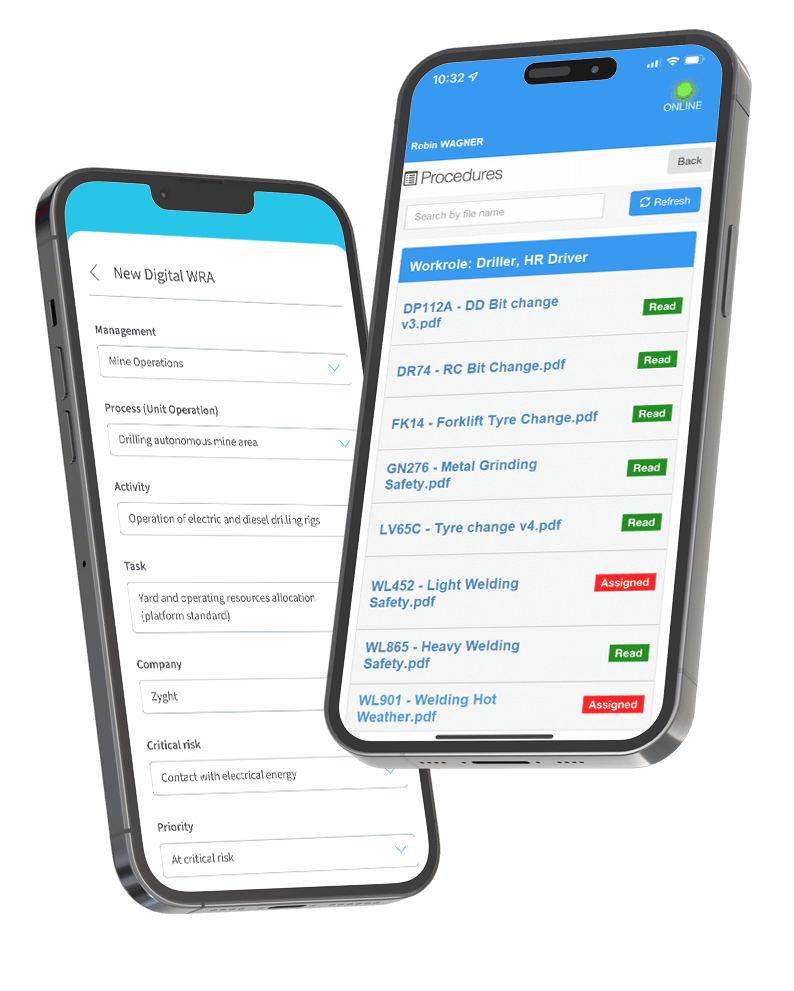
Within that ecosystem, PeopleTray is the practical workforce layer for remote operations. VST describes PeopleTray as a solution for roster scheduling, accommodation bookings, and transportation logistics in industries where employees commute to remote locations for work. The platform also supports camp management, asset management, training tracking, and compliance monitoring.
That is the key point. PeopleTray does not stand alone as a sales story. It supports a broader operating model in which sustainability, workforce wellbeing, and performance are managed together. This aligns with VST’s approach of combining specialized software with long-term value creation for industrial companies.
How to Improve the Process
Centralize data before automating workflows.
Start by defining a single operational record for rosters, travel, accommodation, and compliance. Without shared data, automation only accelerates inconsistency.
Automate the highest-friction steps.
Prioritize recurring tasks such as roster changes, travel approvals, accommodation allocation, and compliance reminders. PeopleTray is designed around these types of remote workforce workflows.
Build traceability into every decision.
Keep a complete audit trail for worker movements, site access, training status, and document renewals. This supports governance and reporting, especially where GRI 403 or internal HSE controls are relevant.
Track operational KPIs.
Useful indicators include accommodation occupancy, roster stability, travel delays, training completion, and compliance exceptions. The goal is not only reporting. It is earlier detection of issues and better operational planning.
FAQ
What makes remote workforce management difficult in mining and energy?
Remote workforce management is difficult because logistics, accommodation, rosters, and compliance are often handled across multiple disconnected systems.
Why is centralization important for FIFO operations?
Centralization improves visibility, reduces manual coordination, and helps managers keep workforce readiness aligned with site requirements.
How does digitalization help with compliance?
Digital systems can track training, certifications, approvals, and document expiry dates in one place, which improves auditability.
What role does PeopleTray play in remote workforce operations?
PeopleTray centralizes roster scheduling, accommodation bookings, transportation logistics, camp management, training tracking, and compliance monitoring.
How does VST fit into the broader sustainability model?
VST connects specialized software for workforce, HSE, ESG, and compliance so industrial companies can improve performance with more traceability and control.
Your next step
Managing remote workforces at scale is no longer just a logistics problem. It is a coordination, compliance, and performance challenge that affects the whole operation. Mining and energy companies that centralize workforce data and workflows are better positioned to improve traceability, reduce administrative friction, and support safer execution.
If your organization is ready to connect workforce logistics, accommodation, and compliance in a more coherent model, explore how VST and PeopleTray fit into that journey. Start the conversation through the VST contact page.