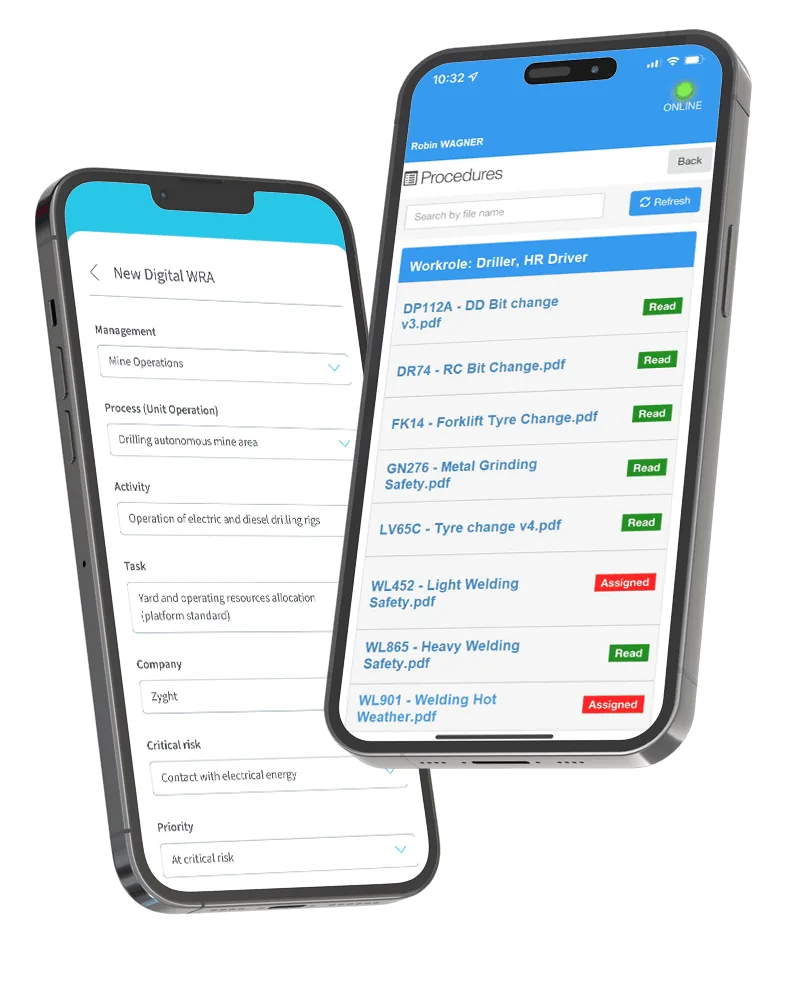

Many industrial organizations believe their HSE systems are integrated because data can move between applications. A safety platform exports incidents to a reporting tool. Occupational health records are shared with compliance teams. ESG metrics are collected from operational systems.
At first glance, everything appears connected.
However, connected vs. integrated HSE systems is one of the most misunderstood topics in industrial digital transformation. Connectivity enables information exchange. Integration creates a unified operational environment where data, workflows, and decisions are synchronized across functions.
For mining, energy, construction, and manufacturing companies, the distinction matters. Regulatory requirements continue to expand, operational risks remain complex, and stakeholders increasingly expect transparent reporting across safety, health, environmental performance, and sustainability. According to the International Organization for Standardization (ISO), management systems are most effective when they align processes and objectives across organizational functions rather than operate independently.
This article provides a practical framework for evaluating whether your technology stack is merely connected or truly integrated—and why that difference influences risk management, compliance, and performance.
The Growing Complexity of Industrial Risk Management
Industrial organizations manage multiple risk domains simultaneously.
These often include:
- Occupational safety
- Occupational health
- Environmental management
- Contractor management
- Regulatory compliance
- ESG reporting
- Operational performance
Historically, these functions evolved independently. Safety teams adopted incident management tools. Occupational health teams implemented medical systems. Sustainability departments deployed ESG reporting platforms.
As a result, organizations often built technology ecosystems that communicate but do not operate as one.
The challenge is becoming more significant. The International Labour Organization (ILO) estimates that millions of workers are affected by occupational injuries and work-related diseases annually, reinforcing the need for coordinated approaches to workplace risk management. Likewise, the World Health Organization (WHO) emphasizes that worker health is influenced by multiple interconnected workplace factors rather than isolated events.
When information remains fragmented, leaders often spend more time reconciling data than identifying emerging risks.
What Is the Difference Between Connected and Integrated Systems?
Connected systems exchange information.
Connected systems allow data to move between applications.
Examples include:
- Exporting incidents from one platform to another
- Sending compliance reports to ESG software
- Synchronizing employee records between HR and HSE systems
Connectivity improves efficiency compared to manual processes.
However, connected systems frequently rely on:
- Scheduled imports
- File transfers
- API exchanges
- Manual validation
- Duplicate data structures
The systems remain operationally independent.
Integrated systems share a common operational framework.
Integrated systems go beyond data exchange.
An integrated environment typically includes:
- Shared data models
- Real-time synchronization
- Unified workflows
- Consistent user governance
- Cross-functional visibility
- Automatic updates across systems
When a worker’s training status changes, that update automatically affects site access permissions, workforce readiness, contractor compliance, and reporting metrics.
The information does not simply move.
It becomes part of a shared operational context.
The National Institute for Occupational Safety and Health (NIOSH) has long advocated integrated approaches to worker health and safety through its Total Worker Health framework, recognizing that workplace outcomes are interconnected rather than isolated disciplines.
Why Connectivity Alone Creates Blind Spots
Connected systems often tell you what happened.
Most organizations can generate reports.
They can review incidents, training records, audits, and environmental performance.
The problem is timing.
When information resides in separate systems, managers often identify issues after they occur.
Examples include:
- Expired certifications discovered before site access
- Health restrictions identified after workforce scheduling
- ESG reporting inconsistencies found during disclosure reviews
- Contractor compliance gaps identified during audits
The organization becomes reactive.
Integrated systems help identify what could happen next.
Integration supports proactive decision-making.
When operational, health, safety, and sustainability information are connected through shared logic, organizations gain earlier visibility into potential risks.
For example:
- Workforce scheduling can automatically consider medical restrictions.
- Environmental incidents can immediately influence compliance workflows.
- Contractor qualifications can be validated continuously.
- ESG disclosures can reflect verified operational data.
This approach aligns with the risk management principles outlined in ISO 31000, which emphasizes continuous monitoring, context awareness, and informed decision-making.
Why Integration Matters for ESG, Occupational Health, and HSE
ESG performance depends on operational data quality.
Many sustainability reports rely on information generated within operational systems.
According to the Global Reporting Initiative (GRI), organizations are increasingly expected to provide transparent, reliable disclosures covering environmental, social, and governance performance.
When ESG systems receive delayed, incomplete, or inconsistent information from operational tools, reporting quality suffers.
Integration improves traceability.
It helps ensure that reported outcomes are supported by verifiable operational records.
Occupational health cannot operate independently from safety.
Worker health and worker safety are closely connected.
The WHO identifies occupational health as a multidisciplinary field involving workplace conditions, exposure management, and worker wellbeing.
Similarly, ISO 45001 promotes a systematic approach to managing occupational health and safety risks across the organization.
When health and safety systems operate separately, organizations may miss important relationships between exposure data, medical monitoring, workforce readiness, and incident trends.
Integration helps connect those insights.
A Practical Evaluation Framework for HSE and Sustainability Leaders
Question 1: Do your systems share a common data model?
If incident records, worker information, compliance requirements, and ESG metrics use different definitions, integration may be limited.
Shared terminology and governance are foundational requirements.
Question 2: Are updates synchronized in real time?
Can changes in one system automatically update all relevant systems?
Or do updates depend on batch transfers, spreadsheets, or manual reconciliation?
True integration minimizes latency.
Question 3: Can users see cross-functional impacts?
Can safety teams understand how workforce health affects operational readiness?
Can sustainability teams verify ESG metrics directly from operational data?
Integrated environments support shared visibility.
Question 4: Are workflows connected across departments?
When an incident occurs, does it automatically trigger related actions for compliance, occupational health, investigations, and reporting?
Disconnected workflows create delays.
Question 5: Is data entered once or multiple times?
Repeated data entry is often a sign of limited integration.
Integrated systems reduce duplication and improve consistency.
Question 6: Can you trace information from source to disclosure?
Auditability is increasingly important.
The ability to follow information from operational activity to final reporting supports governance, compliance, and stakeholder confidence.
The Organisation for Economic Co-operation and Development (OECD) highlights traceability and due diligence as important components of responsible business practices.
The Role of an Integrated Sustainability Ecosystem
Industrial organizations rarely solve integration challenges through a single application.
The challenge is broader.
It involves connecting workforce management, HSE, occupational health, environmental performance, compliance, and ESG reporting into a coherent operating model.
This is the philosophy behind the ecosystem approach promoted by Vela Sustainability Technologies.
Rather than treating sustainability, safety, health, and compliance as separate initiatives, VST focuses on enabling organizations to improve performance through specialized software working within a connected strategic framework. Its portfolio spans occupational health, workforce management, HSE, ESG reporting, and operational compliance, reflecting the reality that industrial risks do not exist in isolation.
The objective is not simply data connectivity.
It is creating the conditions for better decisions, stronger governance, greater traceability, and more proactive risk management across industrial operations.
How to Move from Connectivity to Integration
Establish common governance standards.
Define ownership, terminology, and quality requirements across systems.
Prioritize shared operational processes.
Focus on workflows that span multiple departments, such as incident management, workforce readiness, contractor compliance, and ESG reporting.
Improve traceability.
Ensure critical information can be followed across the entire process lifecycle.
Reduce manual reconciliation.
Identify areas where employees spend time validating or correcting information between systems.
Evaluate future scalability.
Technology decisions should support long-term operational integration rather than isolated point solutions.
FAQ
What is the difference between connected and integrated HSE systems?
Connected systems exchange information, while integrated systems share data models, workflows, governance, and real-time synchronization across functions.
Why is true integration important for industrial companies?
Integration improves visibility, traceability, compliance management, and decision-making across safety, health, ESG, and operational processes.
How can organizations determine if their systems are truly integrated?
Organizations should evaluate shared data models, real-time synchronization, workflow automation, auditability, and cross-functional visibility.
How does integration support ESG reporting?
Integration improves data quality, consistency, and traceability, helping organizations produce more reliable sustainability disclosures.
Why do integrated systems support better risk management?
Integrated systems provide a broader operational context, enabling earlier identification of emerging risks and more informed decision-making.
Take action
Industrial leaders face increasing pressure to improve safety performance, strengthen compliance, support workforce wellbeing, and deliver reliable ESG reporting. Achieving those objectives requires more than moving data between systems.
The real question is whether your technology stack helps teams understand what happened—or whether it helps them anticipate what comes next.
Organizations that move beyond connectivity and embrace integration are better positioned to improve governance, reduce operational blind spots, and create lasting business value.
Explore how an integrated sustainability software ecosystem can support your digital transformation journey by connecting with the team at Vela Sustainability Technologies.
{ “@context”: “https://schema.org”, “@type”: “FAQPage”, “mainEntity”: [ { “@type”: “Question”, “name”: “What is the difference between connected and integrated HSE systems?”, “acceptedAnswer”: { “@type”: “Answer”, “text”: “Connected systems exchange information, while integrated systems share data models, workflows, governance, and real-time synchronization across functions.” } }, { “@type”: “Question”, “name”: “Why is true integration important for industrial companies?”, “acceptedAnswer”: { “@type”: “Answer”, “text”: “Integration improves visibility, traceability, compliance management, and decision-making across safety, health, ESG, and operational processes.” } }, { “@type”: “Question”, “name”: “How can organizations determine if their systems are truly integrated?”, “acceptedAnswer”: { “@type”: “Answer”, “text”: “Organizations should evaluate shared data models, real-time synchronization, workflow automation, auditability, and cross-functional visibility.” } }, { “@type”: “Question”, “name”: “How does integration support ESG reporting?”, “acceptedAnswer”: { “@type”: “Answer”, “text”: “Integration improves data quality, consistency, and traceability, helping organizations produce more reliable sustainability disclosures.” } }, { “@type”: “Question”, “name”: “Why do integrated systems support better risk management?”, “acceptedAnswer”: { “@type”: “Answer”, “text”: “Integrated systems provide a broader operational context, enabling earlier identification of emerging risks and more informed decision-making.” } } ] }