For many software founders, M&A is framed as an exit. But for mission-driven sustainability, ESG, and HSE software companies, the real question is not only “Who will buy the business?”
It is: Who will protect what made the company valuable in the first place?
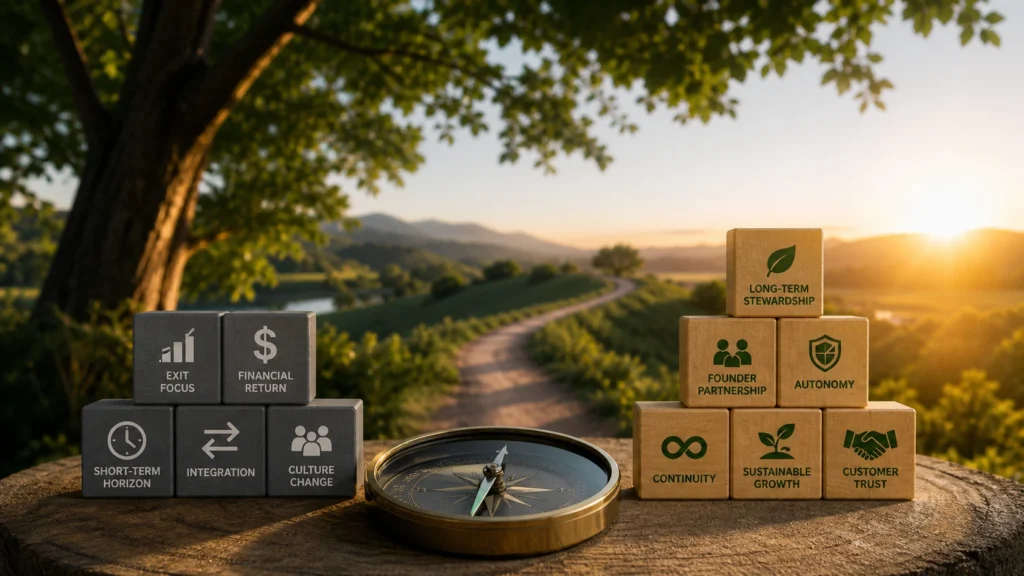
Long-term stewardship M&A offers an alternative to traditional acquisition models. Instead of prioritizing rapid integration, resale, or strategic absorption, it focuses on continuity, autonomy, and sustainable growth.
For founders serving industrial clients in mining, energy, manufacturing, construction, and other high-regulation sectors, this distinction matters. Customers rely on product stability, domain expertise, and trusted teams. Losing those strengths after acquisition can weaken long-term value.
Why Traditional M&A Can Create Founder Tension
Traditional M&A often works well when the buyer’s objectives match the founder’s vision. But tension can emerge when timelines, culture, or operating models diverge.
Private equity buyers typically invest with a defined value-creation plan and an eventual exit path. Recent analysis shows PE firms are under pressure to drive operational value creation through revenue growth and margin improvement, especially as multiple expansion becomes less reliable (McKinsey & Company).
Strategic buyers may pursue synergies through integration. McKinsey notes that strategic acquirers often seek value through cost, capital, and revenue synergie. (McKinsey & Company).
Those models are not inherently negative. But they may not fit every founder. For niche sustainability software companies, aggressive integration can disrupt customer relationships, product roadmaps, and employee trust.
What Is Long-Term Stewardship M&A?
Long-term stewardship M&A is an acquisition model focused on preserving a company’s identity, leadership, customer relationships, and product mission while supporting sustainable growth over time.
It is especially relevant for vertical software companies. These businesses often win because they understand specific workflows, regulations, and customer pain points better than generalist platforms.
In sustainability software, that specialization is critical. ESG, HSE, environmental compliance, workforce wellbeing, and operational risk management require deep industry knowledge.
A stewardship model recognizes that value is not only in code or revenue. It is also in culture, credibility, implementation experience, and long-term customer trust.
VST’s Model: Autonomy With Strategic Support
Vela Sustainability Technologies focuses on acquiring sustainability and HSE software companies while supporting their long-term development. VST states that it specializes in acquiring software companies with innovative sustainability and HSE solutions, with a model built around growth, autonomy, and support.
This is central to the VST approach: acquired companies retain operational independence while gaining access to strategic resources, industry knowledge, and a global network. VST’s own M&A material emphasizes autonomy, long-term growth, continuous innovation, and partnership rather than short-term ownership.
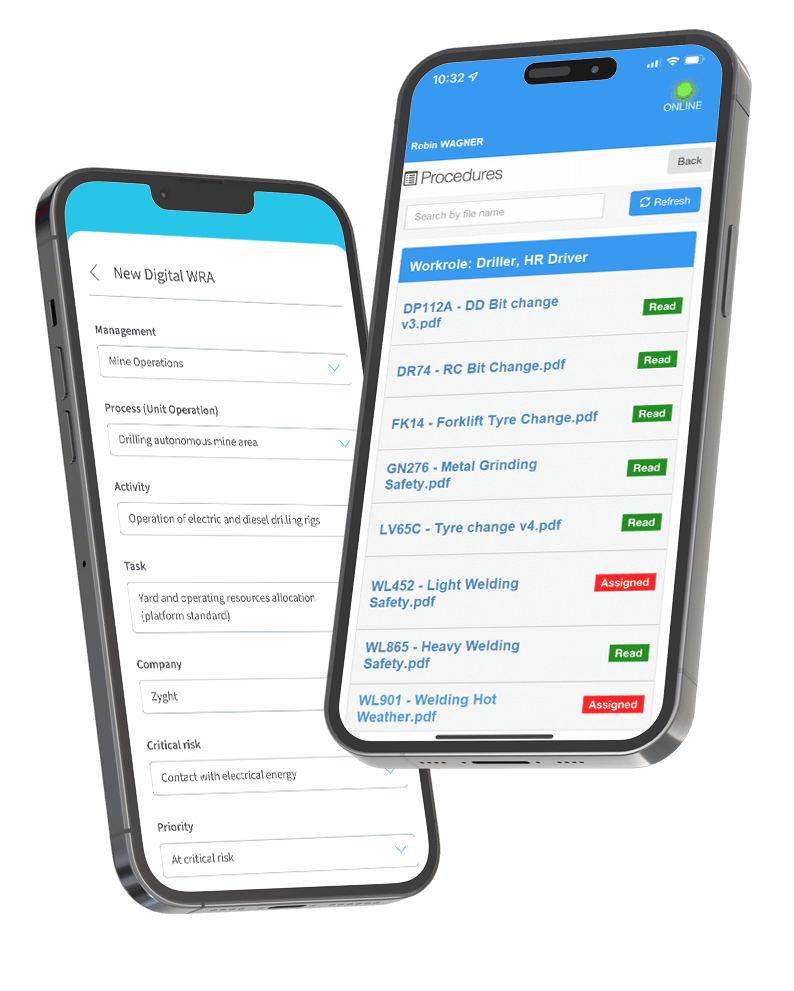
VST’s portfolio includes solutions such as ZYGHT, iSystain, Nexo CS, Qmed, and PeopleTray, serving industrial B2B sectors across sustainability, HSE, health, hygiene, workforce, and compliance needs.
This matters because sustainability software companies often serve customers with complex regulatory and operational environments. Continuity is not a soft benefit. It is a value driver.
VST vs. Private Equity vs. Strategic Buyers
Private equity: disciplined growth, but often with exit pressure
Private equity can bring capital, governance, and operational discipline. However, the fund model usually includes a target holding period and a future liquidity event.
Invest Europe defines the holding period as the time a PE firm retains an investment before exit, linking it directly to investment strategy and lifecycle (investeurope.eu).
For founders, this can create uncertainty. The company may be sold again. Leadership structures may change. Growth plans may be optimized around the next transaction.
Strategic buyers: synergies, but possible integration risk
Strategic acquirers may offer market access, brand power, or complementary products. But their value case often depends on integration.
That can affect product independence, roadmap priorities, internal systems, and even brand identity. In some cases, the acquired company becomes part of a broader platform, which may dilute its original focus.
VST: permanent orientation and operational continuity
VST positions itself differently. Its public materials emphasize a decentralized model, operational independence, continuity of teams, and long-term support.
This aligns with the broader decentralized approach associated with Constellation Software, where acquired businesses operate as independent entities under a decentralized structure. VST notes that it is part of Vela Software, a subsidiary of Constellation Software.
For founders, the difference is practical: the goal is not to erase the company’s DNA. It is to strengthen it.
Why Founders Choose Stewardship Over Exit
1. They want continuity for customers
Sustainability and HSE software customers do not buy tools casually. They rely on them for compliance, safety, reporting, audits, and operational control.
A disruptive acquisition can create concern around support, roadmap stability, and product reliability. Stewardship reduces that risk by preserving the teams and knowledge customers already trust.
2. They want their teams to keep building
Founders often care deeply about employees who helped create the company. A long-term stewardship model can protect institutional knowledge and preserve the culture that made the business successful.
Harvard Business Review has noted that founder-investor partnerships can face friction when control dynamics, culture, and long-term goals are misaligned (Harvard Business School).
VST’s model addresses this risk by emphasizing autonomy and partnership.
3. They want sustainable growth, not forced transformation
Growth is necessary. But growth that breaks product quality, customer trust, or team stability can weaken the company.
VST’s approach supports expansion through shared resources, global reach, and operational expertise while allowing portfolio companies to keep their focus.
4. They want mission alignment
For ESG, HSE, and sustainability founders, mission matters. The buyer must understand that sustainability is not a marketing category. It is a business-critical function for industrial customers.
VST’s stated focus is building an ecosystem of sustainability-driven software companies that support people, planet, compliance, and business performance.
Where iSystain Fits as a Practical Example
iSystain illustrates the type of company that fits a long-term stewardship M&A model. It supports sustainability management and reporting across environmental, social, and governance requirements (Vela Sustainability).
Its value depends on domain depth: ESG data collection, workflows, reporting, compliance tracking, and analytics. These capabilities are not generic. They require trust, configurability, and ongoing alignment with customer needs.
Under a stewardship model, a company like iSystain can continue evolving its specialized platform while benefiting from VST’s broader sustainability software ecosystem.
FAQ
What is long-term stewardship M&A?
Long-term stewardship M&A is an acquisition model that prioritizes continuity, autonomy, and sustainable growth after a company is acquired.
How is VST different from private equity?
VST emphasizes long-term ownership, operational independence, and continuity, while private equity often operates with defined holding periods and future exit objectives.
How is VST different from a strategic buyer?
Strategic buyers often seek integration and synergies, while VST focuses on preserving company identity, leadership, and specialized product expertise.
Why does autonomy matter after acquisition?
Autonomy helps preserve customer trust, employee knowledge, product focus, and the culture that made the company valuable.
What type of companies fit VST’s acquisition model?
VST focuses on sustainability, ESG, HSE, and industrial software companies with strong teams, specialized products, and long-term growth potential.
Take action
For founders, M&A should not mean the end of the mission. The right buyer can protect what has already been built while providing the resources to scale responsibly.
VST’s model offers an alternative for founders who want continuity, autonomy, and long-term sustainable growth.
If your company supports ESG, HSE, sustainability, compliance, or industrial performance, the most important question may be this: What kind of owner will help your company keep becoming what it was built to be?
Connect with VST here: Vela Sustainability Technologies