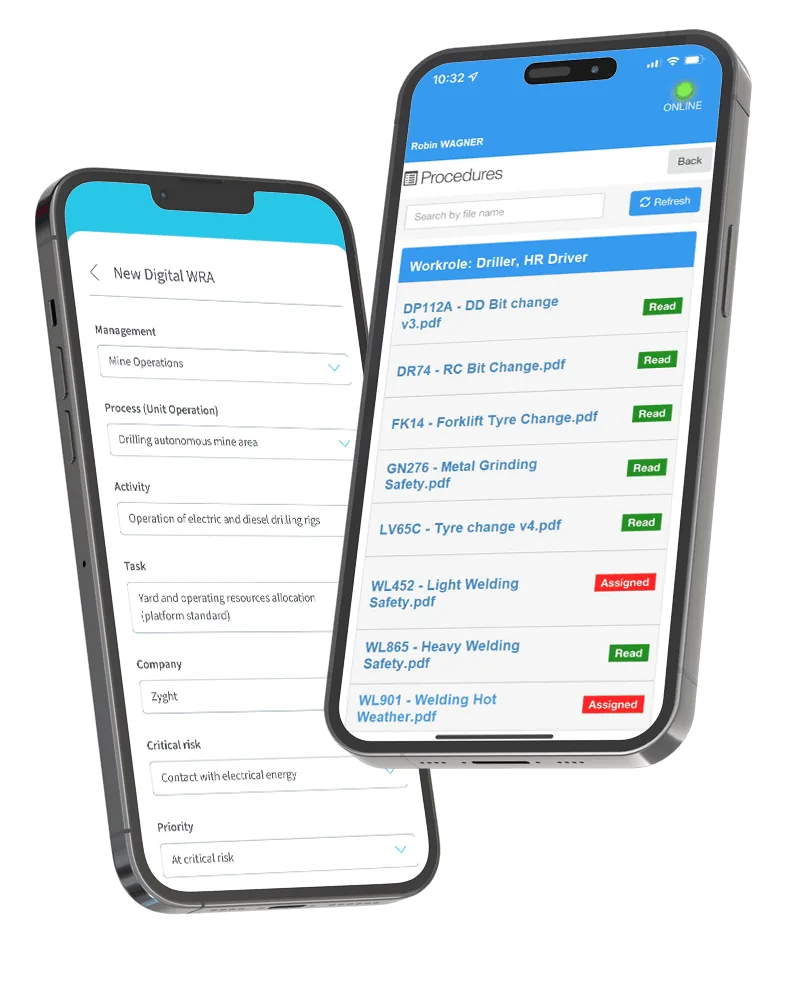

Industrial companies are under growing pressure to prove sustainability performance while protecting workers and maintaining operational continuity.
Yet many organizations still manage ESG reporting, occupational health, safety, and workforce logistics in separate systems. This creates fragmented data, duplicated work, and delayed decisions.
An integrated sustainability stack helps companies connect ESG, HSE, occupational health, and workforce operations into one coordinated strategy.
For mining, energy, manufacturing, ports, and construction companies, this approach improves traceability, compliance readiness, risk management, and workforce wellbeing.
This article explains how companies can move beyond isolated software tools and build an integrated sustainability stack that supports operational excellence.
The Issue: Sustainability Data Is Often Disconnected from Operations
Many companies report ESG performance but struggle to connect those metrics with daily operational decisions.
A sustainability report may include workforce safety indicators, environmental impacts, and social metrics. But if those indicators are disconnected from clinic systems, safety workflows, rosters, and site logistics, they remain incomplete.
The Global Reporting Initiative states that its standards help organizations understand and report impacts on the economy, environment, and people in a comparable and credible way. (Global Reporting Initiative)
However, reporting quality depends on the quality of operational data behind it.
This creates three common issues:
- ESG teams work with aggregated data after the fact.
- HSE and occupational health teams manage risks in separate systems.
- Operations teams make workforce decisions without full visibility into health, safety, or compliance context.
The result is a gap between ESG reporting and operational performance.
What Is an Integrated Sustainability Stack?
An integrated sustainability stack is a connected ecosystem of digital tools that links ESG reporting, health and safety management, occupational health, and workforce logistics into a shared operational framework.
It is not simply a dashboard.
It is a system architecture that allows data, workflows, responsibilities, and performance indicators to move across departments.
In an industrial setting, this means connecting:
- ESG reporting and action tracking
- Safety incidents, risk assessments, and compliance workflows
- Occupational health records and medical surveillance
- Workforce rosters, accommodation, transport, and remote-site logistics
- Analytics for performance, exposure, wellbeing, and operational planning
This structure helps companies move from fragmented compliance to data-informed decision-making.
Why an Integrated Sustainability Stack Matters
ESG Performance Depends on Operational Evidence
ESG reporting is only credible when it is supported by traceable operational evidence.
For example, workforce safety metrics should connect to incident records, corrective actions, medical follow-up, and site-level controls.
Environmental metrics should connect to operational workflows, inspections, actions, and accountable owners.
The ISSB Standards, issued by the International Sustainability Standards Board, establish a global baseline for investor-focused sustainability-related disclosures. (IFRS Foundation)
This increases the importance of reliable, auditable, and decision-useful data.
An integrated sustainability stack helps companies create that foundation.
Workforce Safety Cannot Be Managed in Isolation
Safety performance is not only a compliance issue. It affects productivity, workforce availability, insurance exposure, reputation, and operational resilience.
The International Labour Organization states that occupational risks should be eliminated or minimized through sound risk assessment and management. (OIT)
The WHO and ILO Joint Estimates also show why occupational health and safety remain a global priority. Their work focuses on the burden of disease and injury linked to work.
When safety systems are disconnected from ESG and workforce planning, companies lose the ability to identify patterns across departments.
A connected stack helps leaders see how risks emerge, where controls are failing, and which actions need priority.
Occupational Health Is a Strategic ESG Signal
Occupational health data is often treated as a medical or compliance function.
In reality, it is also a core part of social performance, workforce resilience, and ESG risk management.
For industrial companies, this includes monitoring occupational disease risks, chronic wellness data, fitness-for-work requirements, and exposure-related trends.
ISO 45001 provides an international framework for managing occupational health and safety risks through hazard assessment and risk controls. (ISO)
When occupational health data is connected with ESG reporting and workforce logistics, leaders gain a more complete view of worker wellbeing.
Workforce Logistics Shape Safety and Performance
Workforce logistics are often overlooked in sustainability strategy.
But in remote, distributed, or shift-based operations, logistics directly influence fatigue, exposure, attendance, wellbeing, and productivity.
Roster scheduling, accommodation, transportation, and camp management affect how safely and efficiently work gets done.
This is especially important in mining, oil and gas, energy, ports, and remote infrastructure projects.
A workforce logistics platform becomes part of the sustainability stack when it connects operational planning with health, safety, and ESG objectives.
How VST Connects ESG, Health, Safety, and Workforce Operations
Vela Sustainability Technologies (VST) provides an ecosystem of specialized software solutions for industrial companies focused on sustainability, HSE, compliance, workforce wellbeing, and operational efficiency.
VST’s positioning emphasizes sustainability as a balance between environmental responsibility, people’s wellbeing, and business performance.
Its portfolio is designed to support companies across ESG management, HSE management, occupational health, hygiene, and workforce operations.
This ecosystem approach matters because no single sustainability challenge exists in isolation.
A safety incident may affect ESG performance.
A workforce logistics issue may affect fatigue and operational risk.
A health surveillance trend may indicate exposure concerns.
A compliance gap may require corrective actions across several teams.
VST helps companies treat these signals as connected operational intelligence, not isolated records.
The Four Layers of an Integrated Sustainability Stack
1. ESG Management and Reporting with iSystain
iSystain supports sustainability management and reporting across environmental, social, and governance requirements.
Within an integrated stack, iSystain can act as the ESG management layer. It helps organizations collect sustainability data, manage reporting processes, track actions, and support regulatory compliance workflows.
This is important because ESG reporting should not be limited to annual disclosure.
It should help leaders understand:
- Which ESG risks are emerging
- Which actions are overdue
- Which sites need support
- Which sustainability initiatives are improving performance
- Which data points require stronger evidence
In practice, iSystain helps connect ESG goals with action management.
2. Occupational Health and Hygiene with Qmed
Qmed supports health and hygiene management in industrial environments.
It is designed to help organizations manage occupational health data, clinic capacity, chronic wellness programs, occupational hygiene, and analytics.
In an integrated sustainability stack, Qmed strengthens the connection between workforce wellbeing and operational risk.
For example, Qmed can support:
- Occupational health monitoring
- Chronic wellness management
- Clinic resource planning
- Hygiene-related health programs
- Health analytics for better decision-making
This enables companies to view workforce health as part of sustainability performance, not as a separate medical database.
3. HSE and Compliance Management with Nexo CS
Nexo CS supports health and workplace safety management, including occupational health data, risk and incident management, workforce management, analytics, and compliance workflows.
Within the stack, Nexo CS can support operational HSE processes that connect field-level risks with compliance expectations.
This may include incident tracking, occupational health management, employee safety records, and regulatory reporting workflows depending on the implementation context.
The value is not just documentation.
It is the ability to connect HSE information with ESG indicators, workforce risk, and operational accountability.
4. Workforce Logistics and Remote Operations with PeopleTray
PeopleTray supports workforce management for industries where employees commute to remote locations.
Its capabilities include roster management, fly-in fly-out coordination, accommodation bookings, transportation logistics, camp management, asset management, and analytics.
In an integrated stack, PeopleTray connects workforce movement and availability with broader sustainability and safety objectives.
This matters because workforce logistics can influence:
- Fatigue risk
- Site readiness
- Workforce wellbeing
- Camp safety and comfort
- Operational continuity
- Emergency planning
PeopleTray helps companies manage the operational layer where many ESG and safety outcomes are created.
How the Integrated Stack Works in Practice
An integrated sustainability stack creates a feedback loop between reporting, risk management, health data, and workforce decisions.
For example, imagine a remote mining operation with rising fatigue-related incidents.
A disconnected model might treat this as a safety issue only.
An integrated stack allows the company to investigate the broader pattern:
- ESG reporting identifies workforce wellbeing as a material issue.
- HSE systems show recurring incidents during specific shifts.
- Occupational health data highlights fatigue or wellness concerns.
- Workforce logistics data shows roster patterns, travel time, or camp constraints.
- Action management assigns controls, tracks ownership, and monitors outcomes.
This does not guarantee prevention.
But it gives leaders better evidence to prioritize interventions, improve planning, and reduce risk likelihood.
How to Build an Integrated Sustainability Stack
Start with the Business Questions, Not the Software
Companies should first define the decisions they need to improve.
Examples include:
- Which sites have the highest safety risk exposure?
- Which workforce groups require closer health monitoring?
- Which ESG metrics lack operational evidence?
- Which rosters increase fatigue risk?
- Which corrective actions are overdue?
Once the questions are clear, technology can be aligned to the decision process.
Create a Shared Data Model
Integration requires consistent definitions.
For example, “incident,” “exposure,” “medical restriction,” “corrective action,” and “site” must mean the same thing across systems.
This reduces reporting errors and improves analytics quality.
It also supports auditability.
Connect Workflows Across Departments
A strong stack connects data with action.
If a health trend is detected, it should trigger a review.
If a safety incident occurs, it should create corrective actions.
If a roster creates excessive exposure, it should inform planning.
If ESG indicators change, they should be linked to operational owners.
This turns sustainability from reporting into execution.
Build Dashboards for Different Decision Levels
Executives, site managers, clinic teams, HSE leaders, and ESG teams do not need the same dashboard.
Each group needs role-specific visibility.
Executives need strategic risk and performance indicators.
Site managers need operational priorities.
HSE teams need incidents, controls, and actions.
Health teams need surveillance and wellness trends.
Workforce teams need rosters, logistics, and capacity constraints.
Strengthen Governance and Auditability
ISO 14001 helps organizations manage environmental responsibilities systematically. (ISO)
ISO 45001 provides a framework for occupational health and safety risk management. (ISO)
These frameworks reinforce the importance of documented processes, accountability, monitoring, and continual improvement.
An integrated stack supports these principles by improving traceability across ESG, HSE, health, and workforce data.
Common Mistakes to Avoid
Mistake 1: Treating ESG Reporting as the End Goal
Reporting is important, but it is not the final objective.
The real value comes when ESG data informs operational decisions.
Mistake 2: Keeping Occupational Health Separate from Sustainability
Worker wellbeing is part of social performance and operational resilience.
It should be visible in ESG and HSE strategy.
Mistake 3: Ignoring Workforce Logistics
Rosters, transport, camps, and accommodation can directly affect safety and wellbeing.
They should be part of the sustainability data architecture.
Mistake 4: Building Dashboards Without Workflow Ownership
Dashboards identify issues.
Workflows assign responsibility and drive follow-through.
FAQ
What is an integrated sustainability stack?
An integrated sustainability stack is a connected ecosystem of digital tools that links ESG reporting, health and safety, occupational health, and workforce logistics into one operational framework.
Why do industrial companies need an integrated sustainability stack?
Industrial companies need it to reduce data silos, improve traceability, strengthen compliance readiness, and connect sustainability goals with operational decisions.
How does iSystain support the sustainability stack?
iSystain supports ESG management, sustainability reporting, action tracking, compliance workflows, and analytics for sustainability performance.
How do Qmed and Nexo CS support workforce safety?
Qmed supports occupational health and hygiene management, while Nexo CS supports health, safety, incident, risk, and compliance processes.
How does PeopleTray fit into sustainability and safety strategy?
PeopleTray supports workforce logistics such as rosters, transport, accommodation, and camp management, which can influence wellbeing, fatigue risk, and operational continuity.
Next step
An integrated sustainability stack helps industrial companies move from fragmented data to coordinated operational intelligence.
ESG, occupational health, safety, and workforce logistics should not operate as disconnected functions. They are part of the same performance system.
The companies that connect these layers can improve traceability, strengthen compliance readiness, support workforce wellbeing, and make better operational decisions.
Is your organization managing sustainability as reports, or as an integrated operating model?
Explore how VST’s ecosystem supports connected sustainability performance: